For admissions and registrar offices
Applicants upload once. Reviewers see a complete file.
Applications, transcripts and supporting documents arrive indexed, route to reviewers, and stay findable afterwards.
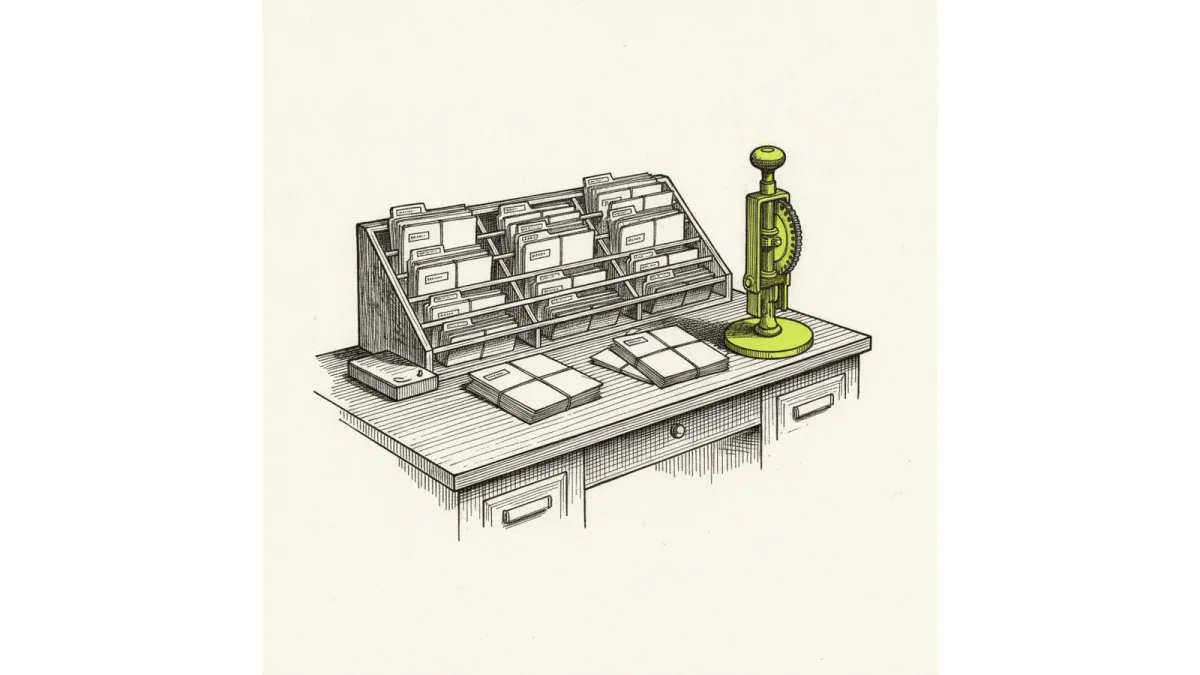
Deadline week, measured
Everything lands at the end
Applications trickle for months and then arrive at once. What breaks is not storage, it is knowing which files are complete.

4 to 1
Channels into one file
Form, recommender, institution, applicant

Filter
Completeness, not a hunt
Missing items are a field, not a discovery
Scoped
Reviewers see their own
Groups decide who reads which file


- Places one file might live4 → 1
- Steps to check completeness5 → 1
- Chasers sent per applicant3 → 1
Four ways in, one file
It arrives from everywhere. It lands in one place.
The file is scattered because the channels are. Point them all at the same project and the file assembles itself.
The application form
Submitted with attachments, indexed on arrival
A recommender upload
Straight into the right applicant file
A prior institution
Transcripts emailed into one known address
The applicant later
The missing item, added without starting again
One applicant file
Indexed on applicant, programme and term
So completeness is something you can filter for, not something you discover during deadline week.

Deadline week
The pool, as states rather than folders
Files move through review with an owner, so where the pool actually stands is a glance rather than a spreadsheet.
- Incomplete142
- Ready for review318
- In review96
- Decision made511
Illustrative figures, not taken from a customer.
Sound familiar
Your week, roughly
- 01Transcripts arriving by email, post and upload, all named differently
- 02Telling an applicant for the second time what is still missing
- 03A reviewer asking where the recommendation letter went
- 04Reassembling a file that was split across two inboxes
- 05Deadline week, and nobody can see which files are complete
And what it costs
What you are paying for now
An application portal
Separate from the system that holds the documents afterwards
Document collection tooling
Another vendor for chasing what is missing
Staff time assembling files
Hours per applicant turning attachments into a reviewable packet
Nucleus One absorbs all three.
Both sides of the line
One system for the office and the public
Staff work the whole thing. Everyone else sees exactly what you publish to them, and nothing else.
Inside: admissions and reviewers
- Admissions staffEvery application and document in one project
- ReviewersSee the files assigned to them and nothing else
- RegistrarTheir own project for records that outlive the decision
What crosses
- A public application formCollects the application and its attachments, indexed on arrival
- A published requirements folderWhat is needed, embedded on the admissions site
- Offers out for signatureSent, signed and filed with the rest of the file
Outside: applicants and recommenders
- ApplicantsSubmit without being given access to the system
- RecommendersUpload a letter straight into the right file
- Prior institutionsSend transcripts into one known destination
How it works
What the office gets
- 01
One destination for everything
Form submissions, uploads and emailed documents land in the same project.
- 02
Indexed as it arrives
Applicant, programme, term and document type travel with each file.
- 03
Review as a board
Files move through states with an owner, so completeness is visible.
- 04
Reviewer-scoped access
Groups decide who sees which applications.
FAQ
Admissions questions
Yes. A public form collects the application and its attachments, and the submission arrives in the admissions project already indexed on the fields you defined.
Yes. Access is controlled through projects and groups, so a reviewer sees the applications assigned to them rather than the whole pool.
Collect one application end to end
Create a free account, publish an application form, and see a complete file assemble itself.
Prefer to talk? Call (863) 937-0272